 Landlocked Fleet


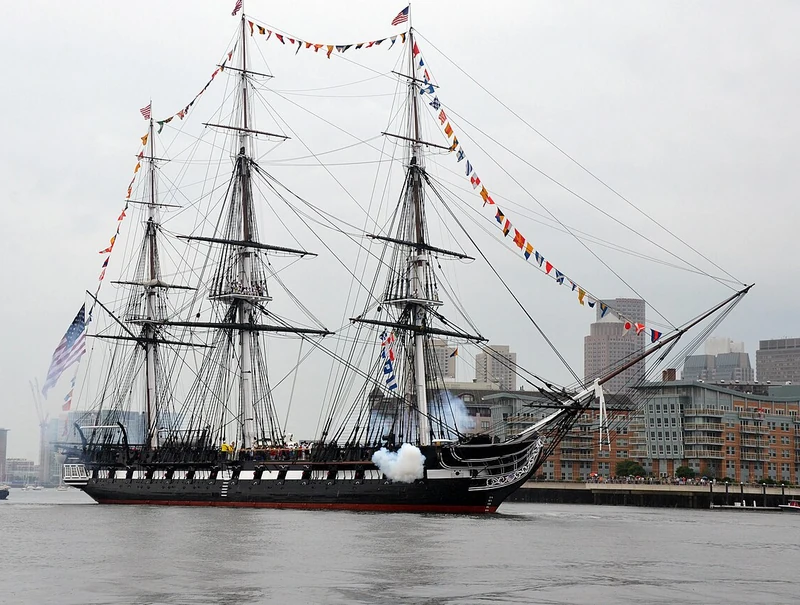
- Date
- 19 August 1812
- Place
- About 400 miles southeast of Halifax, Nova Scotia
- American ship
- USS Constitution, Captain Isaac Hull
- British ship
- HMS Guerriere, Captain James Richard Dacres
- Result
- Guerriere dismasted, taken off and burned
On the afternoon of 19 August 1812 the American frigate USS Constitution met HMS Guerriere about 400 miles southeast of Halifax, Nova Scotia. It was one month after the first clash between British and American forces in the War of 1812. Within a few hours the British frigate was a dismasted wreck, and Constitution had the name she still carries, Old Ironsides.
The navy that went to war in 1812
When the United States declared war on Britain on 18 June 1812, the Royal Navy had eighty-five vessels in American waters. The U.S. Navy was not yet twenty years old and had twenty-two commissioned vessels. Its main strength was a squadron under Commodore John Rodgers, based in New York.
Rodgers put to sea at once and tried to catch a British convoy. The Royal Navy’s North American commander at Halifax, Vice Admiral Herbert Sawyer, answered by sending a squadron under Captain Philip Bowes Vere Broke to find him. Guerriere was one of the frigates in it. The effect was that British ships were drawn together, which let many American merchant ships reach port unmolested.
The chase before the battle
Constitution, under Captain Isaac Hull, was at Annapolis taking on a fresh crew and could not sail for three weeks. Off New York on 17 July she came upon the British squadron, and a stern chase of more than two days followed in light and fitful winds.
Hull lowered boats to tow the ship, pumped ten tons of drinking water overboard and shifted four heavy guns to fire straight astern. His first lieutenant, Charles Morris, proposed kedging, hauling the ship forward on anchors, and that let Constitution pull away. After the escape Hull sailed for Boston for water and put to sea again on 2 August. Broke’s squadron, meanwhile, had lost sight of its quarry. Guerriere was detached and told to proceed to Halifax for a much-needed refit.
19 August 1812: the battle
At 2:00 p.m. Constitution sighted a large ship to leeward. She was Guerriere, under Captain James Richard Dacres. Both ships shortened sail to fighting sail. Dacres fired broadsides from long range, yawing several times, but they were generally inaccurate.
Hull then set extra sail to close the distance, and the two ships exchanged broadsides at what accounts call half pistol-shot. After fifteen minutes Guerriere had suffered far more damage than her opponent. Her mizzenmast fell over the side and dragged her round, and Constitution crossed ahead and raked her. In a second pass Guerriere’s bowsprit fouled Constitution’s rigging, and muskets were fired from both ships. Lieutenant William S. Bush was killed on the American side; Lieutenant Morris and Dacres were wounded.
When the ships broke apart, Guerriere’s remaining masts fell, leaving her helpless. A shot fired in the opposite direction was read as a signal of surrender. Hull sent a lieutenant across, and Dacres answered that, with all three masts gone, the American might say he had struck his flag.
The origin of the name Old Ironsides
The nickname rests on a story from this action. After one cannonball bounced harmlessly off Constitution’s side, a crew member is said to have shouted, “Huzzah! Her sides are made of iron!” The cry is tradition; no documented wording or name survives.
The hull was oak, not iron. Hull noted in the log that two British shots penetrated the hull, with the rest falling short or flying into the rigging. The tale is better read as a sign of how the crew and the public saw the ship. The capture of Guerriere is credited with earning the nickname, which added to a public affection that later saved the frigate from the scrapyard.
After the battle
Hull refused Dacres’ sword, saying he could not take it from a man who had fought so gallantly, and returned his mother’s Bible.
Guerriere could not be towed, so the prisoners and salvage parties came off and she was set on fire at 3:00 p.m. the next day. Constitution was substantially undamaged, but shot lodged in her lower masts ended her cruise. Hull reached Boston ten days after the battle with more than two hundred prisoners, and the news was received with rejoicing. Dacres was acquitted at his court martial; he had argued that Guerriere was French-built, decayed and due for a refit.
Why one frigate mattered
The Royal Navy loss was small; the American gain was not. The land campaign against Canada had gone badly and support for the war had slipped. The effect on American morale was immeasurable. Constitution carried more guns of larger calibre, stronger construction and a larger crew than her opponent.
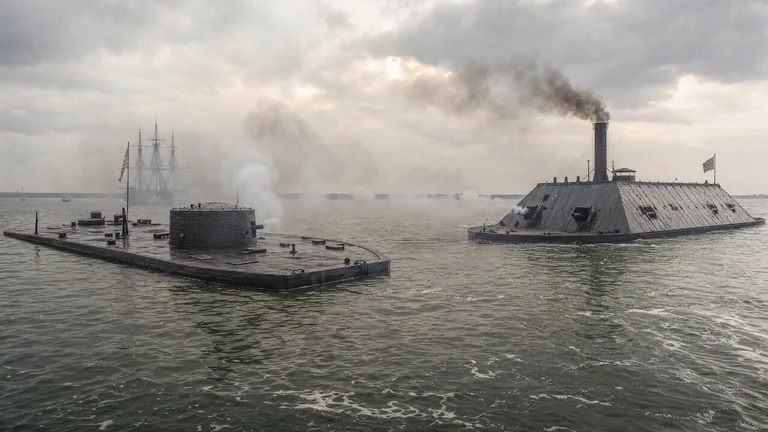
Constitution remains afloat and in commission at Boston. The next fight in the series, in the age of armor, is Hampton Roads; the whole list is on the battles overview. Ships kept today are on the ships page.
Questions and answers
Where did USS Constitution fight HMS Guerriere?
About 400 miles southeast of Halifax, Nova Scotia, on 19 August 1812. Guerriere was on her way to Halifax for a refit when the two ships met.
Why is USS Constitution called Old Ironsides?
The nickname is tied to this battle. By the traditional account a sailor shouted that her sides were made of iron when a British shot bounced off the hull. Constitution's own record shows that two British shots did penetrate.
Who won the battle between Constitution and Guerriere?
Constitution. Guerriere lost all three masts, surrendered and was set on fire the next day, after her crew and the wounded had been taken aboard the American frigate.
Was the battle militarily important?
It has been called arguably inconsequential in military terms, since Guerriere was one ship of a navy of some 600. Its effect on American morale was another matter.
Was Captain Dacres punished for losing his ship?
No. He was tried by court martial, as was customary, and acquitted. The court found no suggestion that he and his men had not done their utmost.