U.S. Navy Ships on Record: Two Submarines, a Harbor Tug, a Battleship and a Cruiser
Each record follows one hull from the builder's yard to her last day in service, and to where she is now.
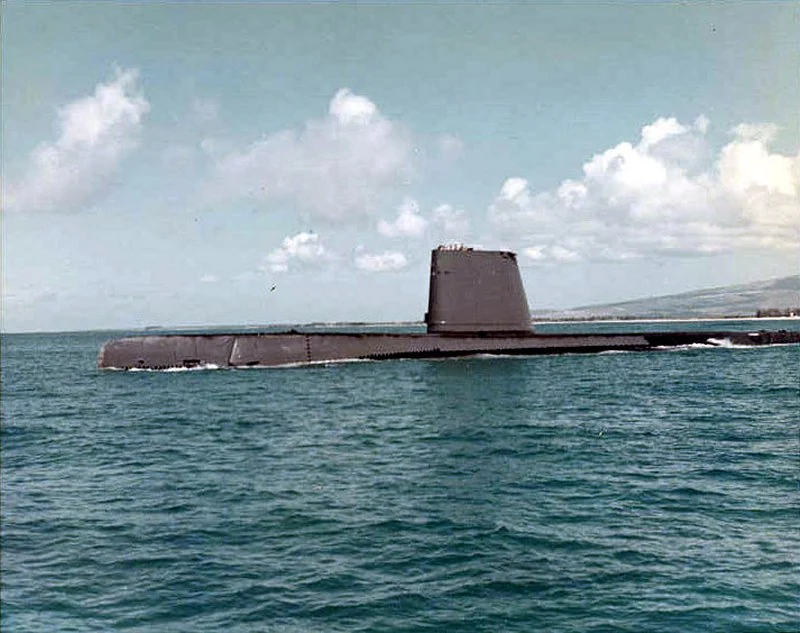
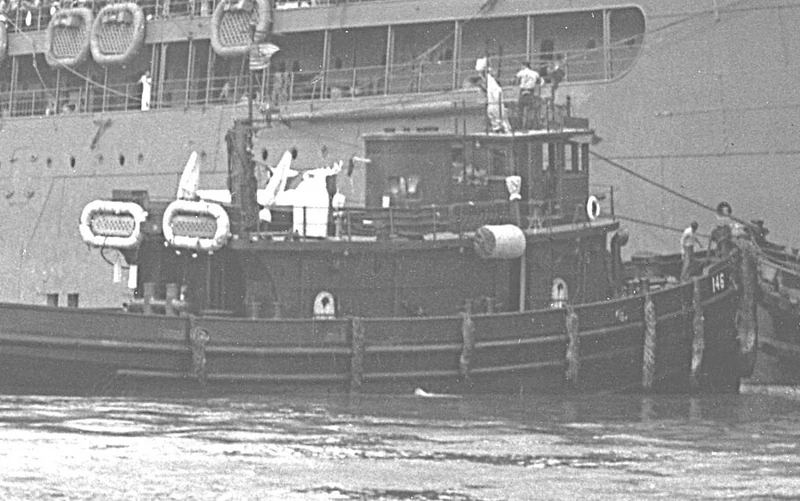
Two of these vessels can still be boarded. The submarine USS Razorback and the harbor tug Hoga are moored side by side on the Arkansas River at North Little Rock. Razorback made five war patrols and lay in Tokyo Bay when Japan surrendered. Hoga fought fires at Pearl Harbor for 72 hours after the attack of 7 December 1941.
The others survive in relics, memorials and paper. USS Snook did not come back from her ninth patrol in April 1945. The battleship USS Arkansas ended as a target at Bikini Atoll in 1946. The records below set out what is known of each, with the sources at the foot of every page.
Every record starts with the same plain facts: the class, the builder, the dates of launching and commissioning, and the day the ship left the Navy list. After that comes the service history in order, and then what happened to the hull. A short list of questions and the sources close each page.
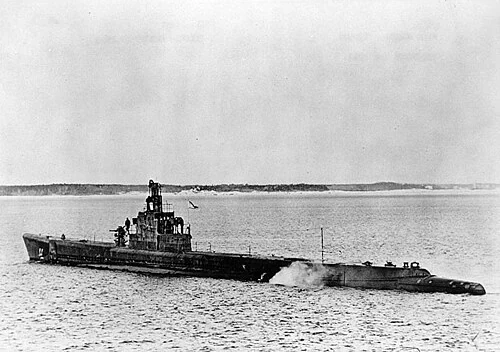
The two submarines show how different the fates of sister designs could be. USS Razorback, a Balao-class boat commissioned on 3 April 1944, survived the war, was rebuilt in the 1950s and served thirty more years as the Turkish TCG Muratreis before she was towed to Arkansas in 2004. USS Snook, a Gato-class boat commissioned in October 1942, was credited with 17 enemy vessels and was lost with all hands in 1945. USS Marlin was something else again, a very small training submarine built in 1953 to play the target for sonar students at Key West.
The tug Hoga never carried a gun, yet she is a National Historic Landmark. She was under way within ten minutes of the first strike at Pearl Harbor, and later worked for 46 years as a fireboat at Oakland. The name USS Arkansas belongs to a battleship that shelled Normandy and Iwo Jima and to a nuclear cruiser of the 1980s.
Submarine plaques and the boats behind them
A ship's plaque is a small shield, cast in metal or carved in wood, that carries a boat's insignia, her name and her hull number. Crews gave plaques to shipyards, host ports and other commands, and a wall of them is a common sight in submarine museums. Each one stands for a hull with a record of her own. Four submarine plaques show how far those records reach.
USS Cutlass (SS-478) was a Tench-class boat commissioned on 17 March 1945. She reached her patrol area off the Kurile Islands one day after Japan announced its surrender. In 1973 she was transferred to the navy of the Republic of China and renamed Hai Shih. Her sister USS Diablo (SS-479), commissioned two weeks later on 31 March 1945, went to Pakistan in 1964 as Ghazi and was lost off the east coast of India during the war of 1971.
The plaque of USS Flying Fish (SSN-673) belongs to a nuclear attack submarine of the Sturgeon class, commissioned on 29 April 1970. She took her name from a Gato-class boat that earned twelve battle stars in the Pacific. USS Sawfish (SS-276), another Gato-class submarine, has a link to Arkansas: she was launched on 23 June 1942 with Senator Hattie Wyatt Caraway of Arkansas as her sponsor, and went on to make ten war patrols.
Which of the ships on this page can be boarded today?
Two of them are open to visitors at North Little Rock: the submarine USS Razorback and the harbor tug Hoga. USS Marlin is also preserved, on display at Freedom Park in Omaha, Nebraska. Snook was lost in 1945, the battleship Arkansas was sunk at Bikini Atoll in 1946, and the cruiser Arkansas was not preserved.
What do the letters and numbers after a ship's name mean?
They are the Navy's hull classification. SS stands for a submarine, SST for a training submarine, YT for a harbor tug, BB for a battleship and CGN for a nuclear-powered guided-missile cruiser. The number is the hull's place in the series of its type, so SS-394 is the 394th hull number in the submarine series.
How did a Balao-class submarine differ from a Gato-class boat?
The two classes look almost alike and share the same layout. The main change was in the pressure hull: the Balao class used thicker steel, which raised the test depth from 300 to 400 feet. Snook was a Gato-class boat, Razorback a Balao.
How were these ships given their names?
Each type followed a rule. Submarines of the 1940s and 1950s were named for fish and other sea creatures, so Snook and Marlin are fish and the razorback is a whale. Battleships carried the names of states, and the cruiser of 1980 took over the name Arkansas. Hoga is a Sioux word for fish.
 Landlocked Fleet