U.S. Naval Battles from 1812 to 1945: Seven Records from Sail to the Surrender in Tokyo Bay
From a frigate duel fought at pistol shot to a battle in which the fleets never saw each other.
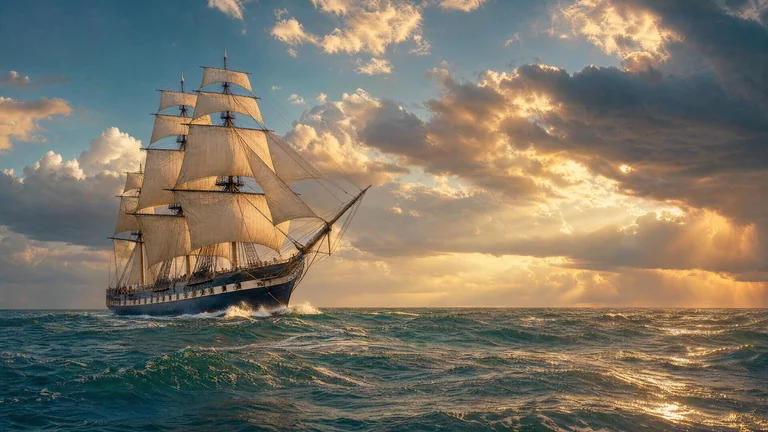
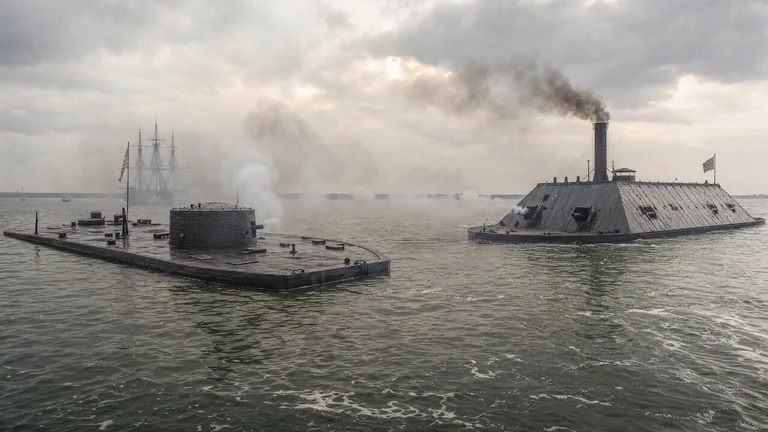
In 1812 the frigate USS Constitution left HMS Guerriere dismasted in about half an hour, close enough for the crews to see each other's faces. In 1862 two ironclads fought to a draw at Hampton Roads and made every wooden warship obsolete. Eighty years later, at Midway, carrier aircraft decided a battle from beyond the horizon.
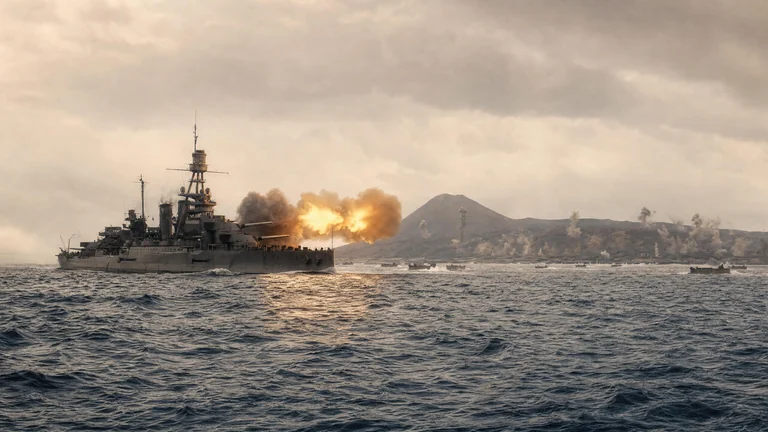
These seven records follow that change. Three of them touch the vessels kept at North Little Rock: the tug Hoga was at Pearl Harbor, the battleship USS Arkansas bombarded Iwo Jima, and the submarine USS Razorback was present in Tokyo Bay when the war ended.
Each record gives the date and place, the forces on both sides, the course of the fighting hour by hour where the sources allow it, and the losses. Famous lines are quoted with their origin, and where a saying is tradition and not documented fact the page says so.
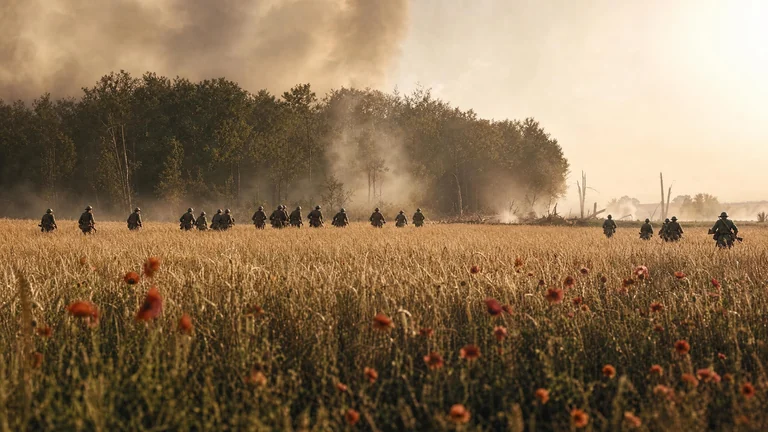
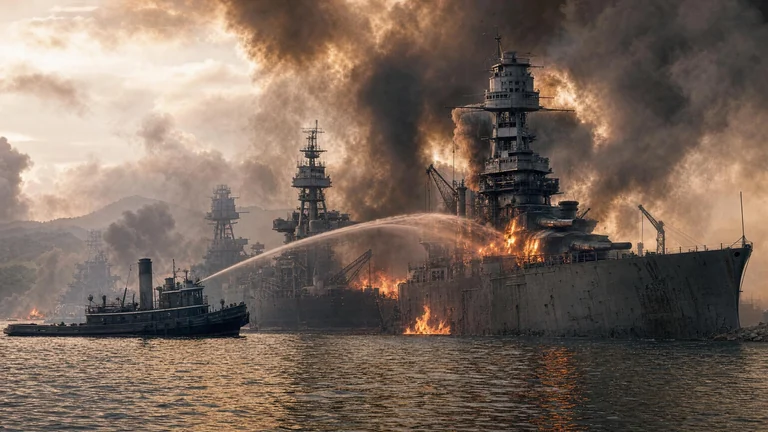
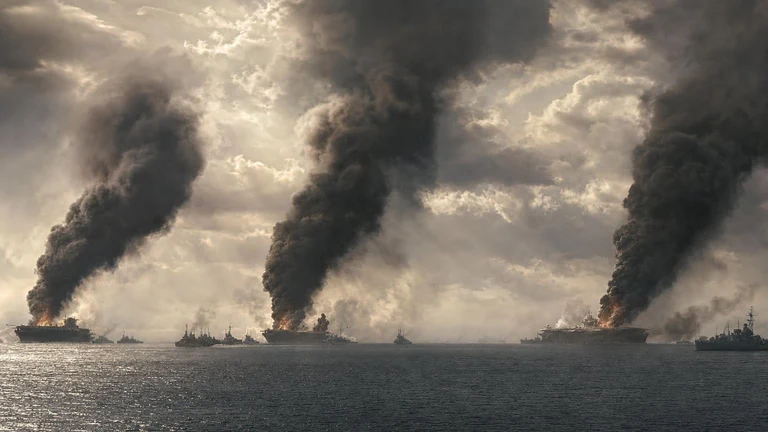
The seven actions were chosen because together they show how sea fighting changed. The Battle of Belleau Wood in June 1918 is the one land battle here; it belongs because the Marines who fought it were part of the naval service. The attack on Pearl Harbor on 7 December 1941 sank or damaged all eight battleships present in one morning, and the Battle of Midway six months later cost Japan four aircraft carriers. At Iwo Jima in 1945 the old battleship USS Arkansas was part of the bombardment force, and twenty-two Marines and five sailors received the Medal of Honor.
The last record is not a battle at all. On 2 September 1945 the surrender of Japan was signed on the deck of USS Missouri in Tokyo Bay, with twelve American submarines present, USS Razorback among them.
The records are arranged in order of date, so they can be read in sequence as a short history of the U.S. Navy at war, or singly. Each one links to the ships on this site that took part, and lists its sources at the foot of the page.
Questions about the battle records
Which of the seven battles lasted longest?
Iwo Jima, with thirty-six days of fighting in February and March 1945. Belleau Wood took twenty-six days in June 1918. The shortest was the duel between USS Constitution and HMS Guerriere in 1812, which was decided in about half an hour.
Which battles are linked to the ships at North Little Rock?
Three of them. The tug Hoga fought fires at Pearl Harbor on 7 December 1941, the submarine USS Razorback lay in Tokyo Bay at the surrender on 2 September 1945, and the battleship USS Arkansas, remembered at the museum by relics, bombarded Iwo Jima.
Why is a surrender ceremony listed among the battles?
Because it closes the story the other records tell. The signing on USS Missouri on 2 September 1945 ended the war that began for the United States at Pearl Harbor, and twelve submarines were present as witnesses. It is the one record here without any fighting.
Which battle was the first between armored warships?
The second day of the Battle of Hampton Roads, 9 March 1862. USS Monitor and CSS Virginia fired at each other for about three hours and neither could seriously damage the other. The day before, Virginia had shown what an ironclad could do to wooden ships.
 Landlocked Fleet