 Landlocked Fleet

- Class
- T-1-class training submarine
- Builder
- Electric Boat Division, General Dynamics, Groton, Connecticut
- Launched
- 14 October 1953
- Commissioned
- 20 November 1953, as USS T-2
- Renamed
- Marlin, 15 May 1956
- Decommissioned
- 31 January 1973
- Home port
- Naval Station Key West, Florida
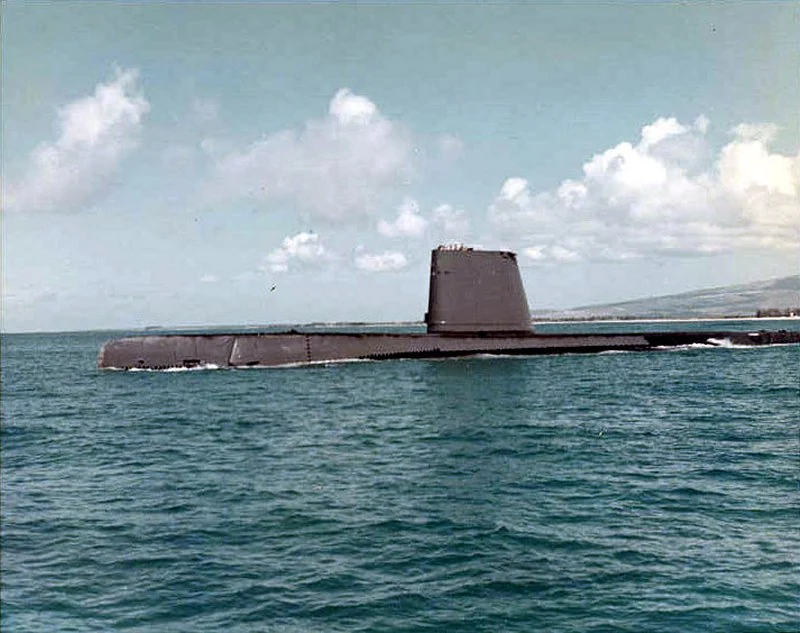
USS Marlin was a submarine that never expected to sink anything. She belonged to the T-1 class, a pair of boats built in the early 1950s to train submarine crews and to test equipment. Apart from the first 25 experimental boats before the First World War, they were among the smallest submarines the U.S. Navy has operated. Marlin served from 1953 to 1973, nearly all of it near Florida and the Caribbean.
Why the Navy built the T-1 class
The design copied a potential enemy. The Soviet M-class submarines were about 160 tons with 16 men aboard, and more than 100 of them were in service around 1950. American planners thought such small boats would work well in restricted waters like the Baltic and parts of the Mediterranean. The T-1 pair were built to look and behave like them, so that anti-submarine forces could practice against a target of the right size.
The first boat, T-1, was planned as an experimental auxiliary submarine, AGSS-570, but was completed as the training submarine SST-1. Her sister T-2 was planned as SST-2 from the start. Both were built by the Electric Boat Division of General Dynamics at Groton, Connecticut, in 1952 and 1953.
Building and commissioning
T-2 was laid down on 1 May 1952. She was launched on 14 October 1953, sponsored by Mrs. William R. DeLoach, and commissioned on 20 November 1953 as USS T-2. After shakedown in Massachusetts Bay she left New London in late January 1954 for Key West, where she joined Submarine Squadron 12 of the Atlantic Fleet.
Twenty years as a target at Key West
For nearly twenty years she worked as a target and training ship, and helped to evaluate submarine and anti-submarine equipment and tactics. She was renamed Marlin on 15 May 1956, the second Navy submarine named for the marlin, a large game fish. Her sister became USS Mackerel.
Marlin went to Guantanamo Bay several times to support the Fleet Training Group, in January 1956, mid-1958, March 1960 and December 1961. From 1963 she was mainly a target for surface ships and aircraft at the Fleet Sonar School at Key West. In March 1965 she joined Mackerel and the attack submarines Amberjack, Batfish and Chivo in mine warfare exercises under the Commander, Mine Force. Her sister Mackerel also tested equipment for the NR-1 Deep Submergence Craft in 1966 and 1967.
Decommissioning and display in Omaha
Marlin and Mackerel were decommissioned together on 31 January 1973 at Key West and struck from the Naval Vessel Register on the same day. Mackerel was sunk as a target in 1978. Marlin was spared: the Navy donated her as a museum ship on 15 August 1973, and on 20 August 1974 she was assigned for display as a memorial at Freedom Park, Omaha, Nebraska.
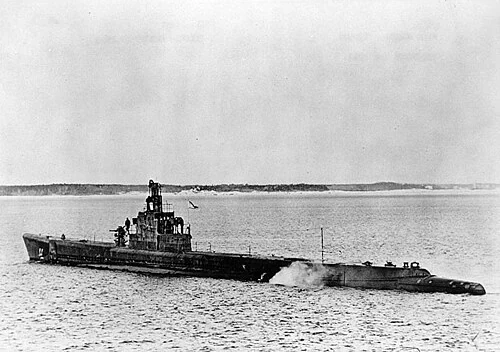
Her story is the quiet side of the submarine force, compared with the war service of USS Razorback or the loss of USS Snook. Crews had to practice against something, and Marlin was one of the boats built to be that target.
Questions and answers
Why was USS Marlin so small?
The T-1 class was built to resemble the Soviet M-class submarines, which displaced about 160 tons and had 16 crew. The Navy wanted a realistic small target to train anti-submarine forces.
Was Marlin ever in combat?
No. She was a training submarine, used as a target for surface ships and aircraft and to test equipment, mainly from Key West.
What was Marlin first called?
She was commissioned as USS T-2 in 1953 and was renamed Marlin on 15 May 1956. Her sister ship T-1 became USS Mackerel.
Where is USS Marlin now?
The Navy donated her as a museum ship in 1973, and in 1974 she was assigned for display at Freedom Park in Omaha, Nebraska.