 Landlocked Fleet

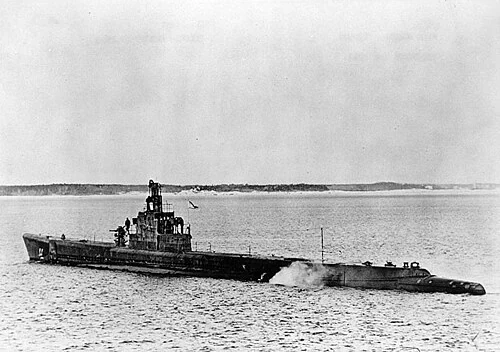
- Class
- Gato
- Builder
- Portsmouth Navy Yard, Kittery, Maine
- Launched
- 15 August 1942
- Commissioned
- 24 October 1942
- Credited
- 17 enemy vessels sunk
- Honors
- Seven battle stars
- Lost
- April 1945, ninth patrol; presumed lost 16 May 1945
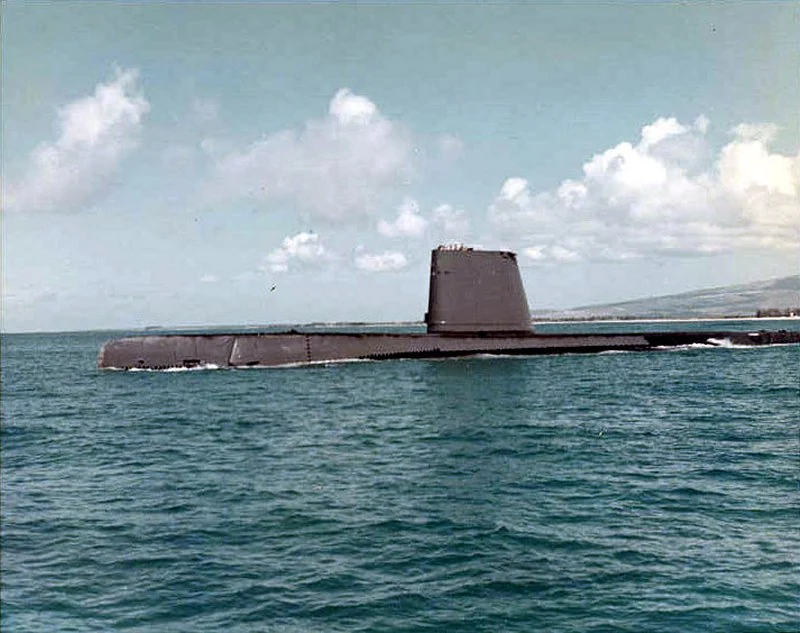
USS Snook (SS-279) was the first U.S. Navy ship named for the common snook, an Atlantic fish that is bluish-gray above and silvery below a black lateral line. She served in the Pacific from spring 1943, and by the end of 1944 her record included two of the war’s costliest ship sinkings by loss of life. In April 1945 she vanished on her ninth patrol. Her fate has never been settled. This is the WWII record of USS Snook SS-279, from her launch to her loss.
Building USS Snook at Portsmouth
Snook’s keel was laid at the Portsmouth Navy Yard in Kittery, Maine, on 17 April 1942. She was launched on 15 August and sponsored by Mrs. Audrey Emanuel Dempsey, wife of Lieutenant James C. Dempsey, who held the Navy Cross as commanding officer of USS S-27. Snook was commissioned on 24 October 1942.
After shakedown off New England she left New London on 3 March 1943 for the Pacific.
SS-279 in WWII: the first four patrols
On her first patrol, mine planting off Shanghai and then the Yellow Sea, Snook sank the freighters Kinko Maru and Daifuku Maru on 5 May 1943 and the cargo ship Hosei Maru, 4,363 tons, on 7 May. She added two armed trawlers on 13 and 16 May.
The second patrol, off the Ryukyu Islands, produced a six-torpedo spread on 4 July that sank Koki Maru and Liverpool Maru and badly damaged Atlantic Maru. On the third, she photographed Marcus Island, stood lifeguard for carrier strikes, and sank the 9,650-ton transport Yamato Maru on 13 September and Katsurahama Maru on 22 September. Four crewmen were hurt in a gun duel with a smaller vessel on 29 September.
The fourth patrol, with Pargo and Harder off the Marianas, sank the passenger-cargo ship Yamafuku Maru and the cargo ship Shiganoura Maru on 29 November.
The fifth patrol and the Lima Maru
Snook’s fifth patrol, from 6 January 1944, was her best. She sank the converted gunboat Magane Maru on 23 January off the Bonin Islands. On 8 February she attacked a 13-ship convoy and hit the troopship Lima Maru with three of four torpedoes; 2,765 people died, the 11th-worst loss of life from a ship sunk by a submarine.
She also sank the freighters Nittoku Maru and Hoshi Maru Number Two on 14 and 15 February. On 23 February she approached a convoy through a screen of 11 escorts and sank the passenger-cargo ship Koyo Maru. The patrol ended on 6 March, and the boat went to Hunters Point for a major overhaul.
Patrols six to eight, and the Arisan Maru
The sixth patrol, in July 1944, found only two freighters, both missed on 12 July. The seventh took her to the Luzon Strait and the South China Sea. On 23 October 1944 she sank the passenger-cargo ship Shinsei Maru Number 1 and the tanker Kikusui Maru, then the cargo ship Arisan Maru with five bow torpedoes. The Arisan Maru was carrying American prisoners of war, and about 1,773 of them died, the 23rd-worst loss of life from a ship sunk by a submarine. Snook rescued a downed airman on 3 November.
The eighth patrol, off the Kuril Islands from 25 December 1944 to 17 February 1945, saw only two friendly Soviet vessels and a brief contact with a small patrol craft.
The loss of Snook in April 1945
Snook was lost on her ninth patrol, in the South China Sea and Luzon Strait. On 8 April 1945 she reported her position to the submarine Tigrone. When she did not acknowledge messages the next day, she was presumed to have headed toward the Luzon Strait.
On 12 April she was ordered to lifeguard station near Sakishima Gunto, supporting British carrier air strikes. On 20 April the British task force commander reported a plane down in her area and no radio contact with the submarine. Snook was ordered to search and acknowledge. When she did not transmit, the submarine Bang was sent. Bang rescued the airmen but found no trace of Snook. On 16 May she was presumed lost for unknown causes.
She is believed to have been sunk by the Japanese kaibokan Okinawa, CD-8, CD-32 and CD-52, though she may instead have been lost in combat with one of five Japanese submarines also lost in April and May 1945. One candidate is I-56, a hypothesis not confirmed by any Japanese source.
Possible discovery and memorial
In 1995 divers with an ROV off Iriomote Island found a sonar contact with a metal structure about 115 feet long, at about 1,148 feet depth, angled 20 to 30 degrees. They thought it quite possibly Snook but never returned; their ROV was lost in 1997.
A memorial to Snook stands on the North Little Rock shoreline beside USS Razorback and a memorial to USS Scorpion, near the tug Hoga. In WWII, USS Snook SS-279 was credited with 17 enemy vessels and earned seven battle stars. Razorback’s own patrols in the same war are on the war patrols page.
Questions and answers
How many war patrols did USS Snook make?
Nine. She was lost on the ninth, in the South China Sea and Luzon Strait, in April 1945.
How many ships was USS Snook credited with sinking?
Seventeen enemy vessels in two and a half years of active service. She earned seven battle stars for World War II.
What happened to USS Snook?
She reported her position to the submarine Tigrone on 8 April 1945 and was never heard from again. She was presumed lost on 16 May 1945 due to unknown causes.
Was the wreck of Snook ever found?
Not confirmed. Divers working with a remotely operated vehicle in 1995 found a metal structure about 115 feet long in roughly 1,148 feet of water off Iriomote Island, and thought it might be Snook, but no further dives were made.
What was the Arisan Maru?
A cargo ship that Snook sank on her seventh patrol, in October 1944. About 1,773 American prisoners of war died when she went down.
Is there a memorial to Snook in Arkansas?
Yes. A memorial to USS Snook stands on the shoreline in North Little Rock, beside USS Razorback and a memorial to USS Scorpion.