 Landlocked Fleet

- Date
- 2 September 1945
- Place
- Deck of USS Missouri, Tokyo Bay
- Duration
- 23 minutes, signing just after 09:00 JST
- Took effect
- 09:25 JST
- Submarines present
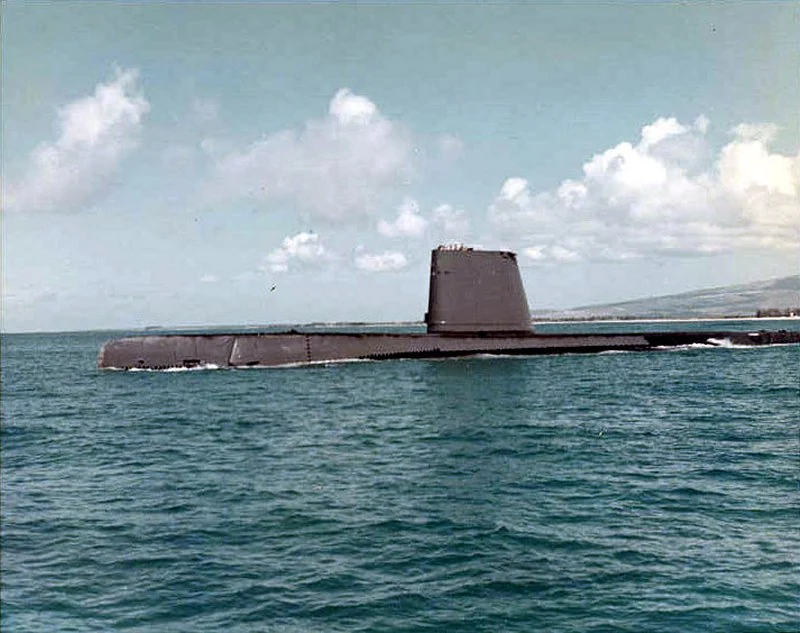
- Twelve, including USS Razorback (SS-394)
The Japanese Instrument of Surrender was signed on the deck of the battleship USS Missouri, anchored in Tokyo Bay, just after 09:00 Japan Standard Time on 2 September 1945. It took effect at 09:25. Representatives of Japan and of nine Allied nations signed: the United States, China, the United Kingdom, the Soviet Union, Australia, Canada, France, the Netherlands and New Zealand.
Preparing the document and the deck
General Douglas MacArthur’s staff, led by Colonel LeGrande A. Diller, drafted the instrument. Resources in war-torn Manila were limited, and a staff member found a rare parchment in the basement of a monastery, which went to MacArthur’s printer.
Japan’s cabinet had trouble finding delegates for the task. Prime Minister Higashikuni, of the Imperial family, could not go, and Prince Fumimaro Konoe refused. Mamoru Shigemitsu and Yoshijirō Umezu accepted the Emperor’s personal appeal and became the two signatories, with nine other delegates. The eleven left Tokyo by car early on 2 September, boarded USS Lansdowne at Yokohama and sailed out to the Missouri.
The ship’s crew rehearsed the ceremony. A few minutes before the Japanese arrived, the small mahogany table lent by the British was found too small for both copies, and a folding table from the ship’s mess hall draped in a stained green cloth was put in its place.
The Japanese delegation and the dress question
The Japanese came in formal attire: morning dress for the civilians, full dress for the officers. Missouri’s navigator, James L. Starnes, suggested that the Allied attendees dress formally too. MacArthur overruled him, remarking that they had fought in khaki and would accept the surrender in khaki. The contrast was deliberate.
The 23-minute ceremony
The ceremony lasted 23 minutes and was broadcast throughout the world. Shigemitsu signed first at 9:04 a.m. and Umezu at 9:06. MacArthur accepted the surrender at 9:08 as Supreme Commander for the Allied Powers. Fleet Admiral Chester Nimitz signed for the United States at 9:12, and eight other representatives followed between 9:13 and 9:22, from General Hsu Yung-chang for China to Air Vice-Marshal Leonard M. Isitt for New Zealand. At 9:25 a.m. the war was officially over.
One odd detail concerns the Japanese copy. The Canadian signer, Colonel Lawrence Moore Cosgrave, signed one line too low, so everyone after him did the same. General Richard K. Sutherland corrected the titles by hand and initialed each change, after which the Japanese accepted the copy.
Missouri’s captain, Stuart Murray, said later that the flags on the deck were plain GI-issue, despite stories of a flag flown at the White House on 7 December 1941. The one special flag was Commodore Perry’s, flown from his ship in Tokyo Bay in 1853 and 1854, brought out from the Naval Academy Museum.
Twelve submarines in the bay
USS Razorback entered Tokyo Bay on 31 August with eleven other submarines to take part in the formal surrender. That made twelve boats. She left on 3 September and reached Pearl Harbor on 11 September. Her full story is on the page for USS Razorback, and she is now a museum ship at the Arkansas Inland Maritime Museum.
MacArthur’s broadcast
After the ceremony MacArthur spoke to the world by radio. The Navy’s history office preserves the address, and one passage reads: “Today the guns are silent. A great tragedy has ended. A great victory has been won.”
The documents afterwards
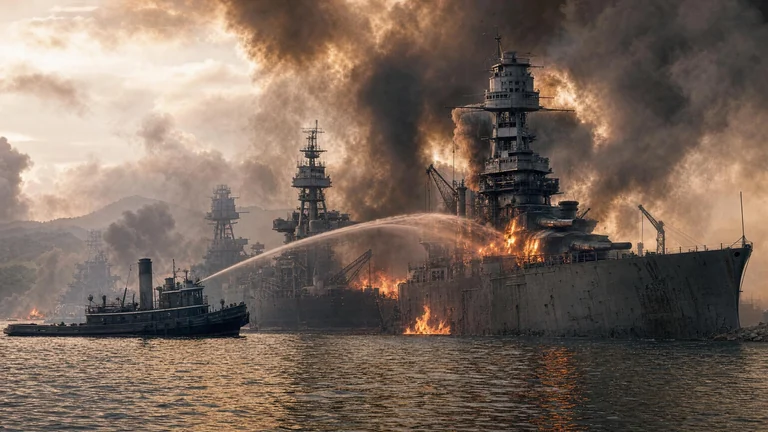
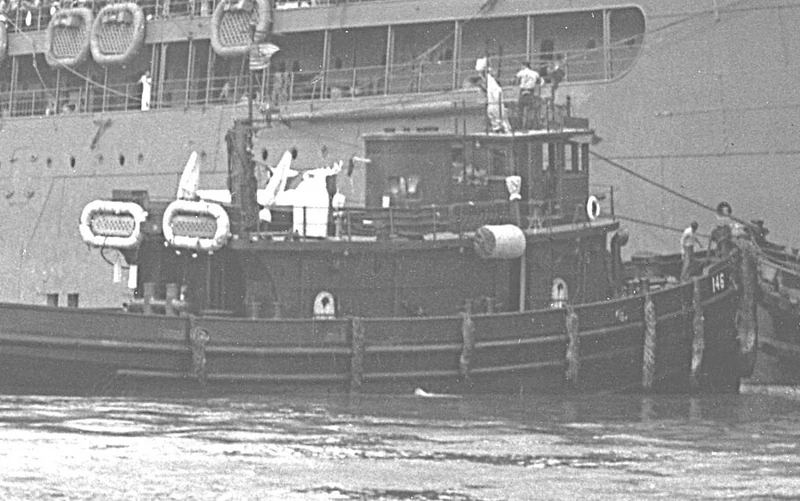
The Allied copy reached Washington on 6 September, and Colonel Bernard Theilen presented it to President Harry S. Truman the next day. It is now at the National Archives. The Japanese copy is held by the Ministry of Foreign Affairs in Tokyo. Regional surrenders followed in the Philippines, Korea and Southeast Asia. The war had opened at Pearl Harbor, where the tug Hoga fought fires; see the page on the attack on Pearl Harbor and the battles overview.
Questions and answers
Where was Japan's surrender signed?
On the deck of the battleship USS Missouri, anchored in Tokyo Bay. The signing took place just after 09:00 Japan Standard Time on 2 September 1945 and took effect at 09:25.
How long did the surrender ceremony last?
23 minutes. It was broadcast around the world.
Who signed for Japan?
Foreign Minister Mamoru Shigemitsu signed first, at 9:04 a.m., for the Emperor and the government. General Yoshijirō Umezu followed at 9:06 for the Imperial General Headquarters.
How many submarines were in Tokyo Bay?
Twelve. USS Razorback entered Tokyo Bay on 31 August 1945 with eleven other submarines, and she left on 3 September.
Is 2 September the same as Victory over Japan Day?
The date is sometimes known by that name, but the designation more often refers to 15 August, when the Emperor's radio broadcast announced acceptance of the Potsdam Declaration.