 Landlocked Fleet

- Class
- Balao (fleet submarine)
- Crew
- 60 to 80 men, as the design assumed
- Patrol length
- Up to 75 days from Hawaii to Japan and back
- Comforts
- Showers, air conditioning, refrigerated food storage, washers
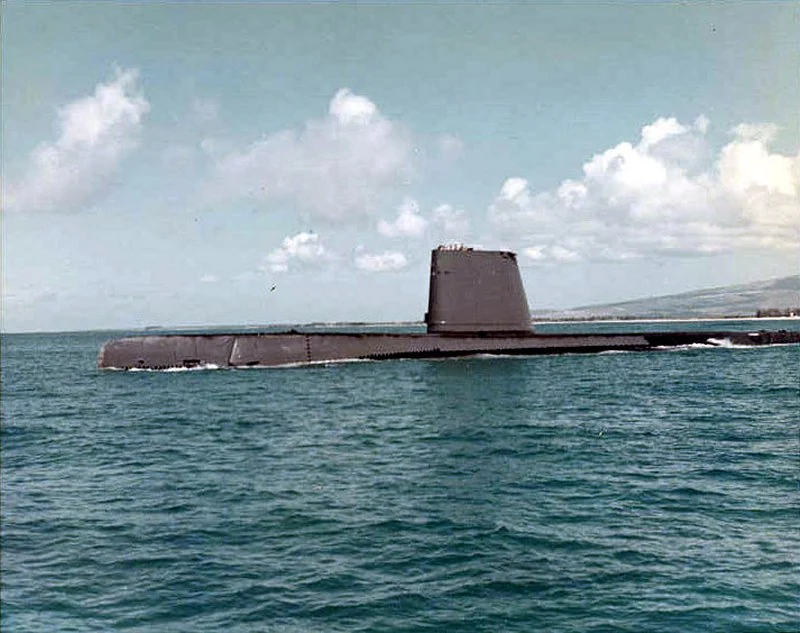
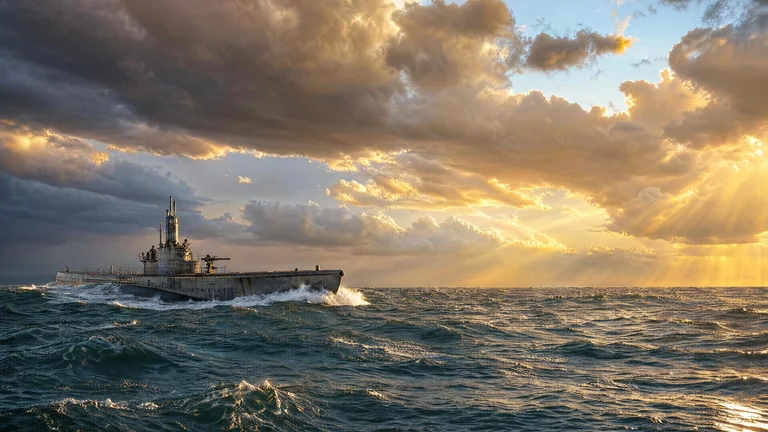
A submarine is a poor place to sleep, and the designers of the U.S. fleet boats knew it. They also knew the boats would be out for weeks in warm water. USS Razorback was a Balao-class boat, a development of the Gato class, and the Gato design shows what the Navy planned for the crew.
Crew size and patrol length
The bureau designers expected a crew of 60 to 80 men to carry out patrols of 75 days from Hawaii to Japan and back. That is a long time in a closed hull, so they treated crew comfort as a matter of health and efficiency, not luxury.
The Balao class kept the Gato layout with a deeper test depth, 400 feet instead of 300, from thicker hull steel, and had only slight internal differences.
Bunks for nearly every man
The boats had bunks for nearly every crew member, a luxury virtually unheard of in other navies. The submarines also had showers, clothes washers, refrigerated storage for food and generous freshwater distilling units.
Hot bunking
Hot racking, or hot bunking, means assigning more than one crew member to a bed to save sleeping space. Depending on the watch system, two or even three men can share one bunk. A man coming off watch lies down in a rack just vacated by a man going on, so the bunk is still warm. Generally the lowest-ranking members of the crew are the ones required to share.
The practice is documented as common on submarines, where space is tight. Whether any particular Balao boat used it in 1944 and 1945 is not recorded.
Air conditioning and the heat below
Air conditioning was part of the design for practical reasons. A boat that stayed under for a long time collected heat from recently shut-down engines, electrical equipment and the crew. Temperatures could climb above 100 degrees Fahrenheit. Humid tropical air then condensed and dripped into equipment, causing electrical shorts and fires.
The system worked mostly as a dehumidifier and proved a key factor in the success of the boats in World War II. It also made the living spaces bearable for men on the war patrols of 1944 and 1945.
Changes after the war
The postwar GUPPY conversions rearranged the interior. GUPPY II was cramped, with four battery wells replacing storage and refrigeration spaces. GUPPY IA brought better habitability. GUPPY IIA, the standard Razorback received, removed one forward engine and put pumps and air conditioning machinery in its place to ease the overcrowding; the details are in the page on the GUPPY conversion. Only the later GUPPY III boats were cut and lengthened to add berthing.
The wider story of the boat is on the main USS Razorback record.
Questions and answers
How many men lived aboard a Balao-class submarine?
The Gato-class design, on which the Balao class was based, assumed a crew of 60 to 80 men.
Did every sailor have his own bunk?
The designers provided bunks for nearly every crew member. Hot bunking, in which two or three men share one bunk in turn, is a recognised practice on submarines, but how often it was used on Razorback is not recorded.
Why did the boats have air conditioning?
Mainly to cope with heat and humidity. After a long submerged period, temperatures could rise above 100 degrees Fahrenheit, and condensation could cause electrical shorts and fires.
Did the GUPPY rebuild change crew space?
Yes. GUPPY IA gave better habitability than GUPPY II, and GUPPY IIA relieved cramped conditions by removing a forward engine for pumps and air conditioning machinery.